
NewsGram, April 3, 2016
New Delhi, India -- Buddhism is a way of finding peace
within oneself. It is a religion that helps us to find the happiness and
contentment we seek. Buddhists develop inner peace, kindness and wisdom
through their daily practice; and then share their experience with
others bringing real benefit to this world.
 They
try not to harm others and to live peacefully and gently, working
towards the ultimate goal of pure and lasting happiness for all living
beings.Buddhism was spread by the third and the most powerful Mauryan
emperor Ashoka.
They
try not to harm others and to live peacefully and gently, working
towards the ultimate goal of pure and lasting happiness for all living
beings.Buddhism was spread by the third and the most powerful Mauryan
emperor Ashoka.After the battle of Kalinga, Ashoka felt immense grief due to the huge loss of lives during the war and thus decided to follow the path of Buddhism.After this, he began to implement Buddhist principles in the administration of his kingdom and named the new code of conduct ‘Dhamma’. Here, in order to inform everyone about his new political and ruling philosophy, he got edicts (proclamation) inscribed on stone pillars and placed them throughout his kingdom, which are present even today.
Ashoka not only helped in spreading the religion within India but outside India as well. The main reason for the spread of Buddhism into Southeast Asia was the support of the emperor Ashoka himself. Teams of missionaries were sent by him all over the Indian sub-continent, i.e. to Sri Lanka, Myanmar (Previous Burma), and other neighbouring areas so as to send the message of Buddhism. The missionaries sent by Ashoka to the other countries were well received by them and the conversions took place easily because of the influence and the personal power Ashoka exercised.Ashoka’s most successful missions were headed by his son Mahindra, who travelled to Sri Lanka along with four other monks and a novice. This mission turned out to be so successful that the king of Sri Lanka himself became a Buddhist, and Mahindra then supervised the translation of the Theravada canon (written in the Pali language) into Sinhala, the Sri Lankan script. He also helped in finding a monastery named Mahavihara, which became the main supporter of the Theravadin orthodoxy in Sri Lanka for over 1,000 years.
China recorded its contact with Buddhism with the arrival of a Buddhist scholar, Bodhi Dharma, who travelled from India to China along with other monks in 475 CE. Bodhi Dharma introduced the teachings of the Buddha to the Chinese, who were influenced by the teachings. Buddhism and Chinese Taoism intermingled with one another, thereby resulting in the Ch’an school of Buddhism in China. Buddhism traveled further towards Korea and Japan. As per Nihonshoki in 552 CE, the Korean state of Paekche sent Buddhist texts and images to Japan so as to convince the Japanese emperor to become an ally in its war with the neighboring state of Silla.
In the initial stages, Japanese inclination towards Buddhism was majorly related to the magical powers of Buddha and Buddhist monks. But when the emperor Yomei (CE 585 – CE 587) adopted Buddhism, the Japanese began to travel to China in order to learn from the Buddhist teachers there, and a number of indigenous Buddhist schools developed in Japan.
Yomei’s son, Prince Shotoku (CE 574 – CE 622) propagated Buddhism, built various Buddhist temples and sent Japanese monks to travel to China for further studies on Buddhism. Besides these, he also wrote commentaries on three Buddhist texts.
The Indian scholar, Shantarakshita went to Tibet during the reign of the Tibetan king Trisong Detsen (CE 740 – CE 798), but due to the opposition from some of the king’s ministers, he had to leave. But before Shantarakshita left, he persuaded the king to invite the tantric adept Padmasambhava, who his arrival asserted that Shantarakshita’s efforts had been ruined by the demons of the country. Padmasambhava defeated all the demons in a personal combat which impressed the king and his court who then invited Shantarakshita again and the first monastery in Tibet was built at Samye.
This marked the beginning of the “first dissemination” of Buddhism to Tibet, which ended when the devout Buddhist king Relbachen (815-836) was assassinated, which further led to the beginning of an interregnum period for Tibetan Buddhism, which ended in 1042 CE, when Atisha (982 CE – 1054 CE), one of the directors of the monastic university of Nalanda, traveled to Tibet.
Tibetan historians consider this to be the beginning of the ‘second dissemination’ of Buddhism in Tibet. Atisha was so successful in bringing the dharma to Tibet that Buddhism quickly became the dominant religious tradition in the country.
The spread of Buddhism in western countries
Buddhism is acquiring a grip in Western countries today, where a number of prominent Buddhist teachers have established successful centres in Europe and North America.
The Dalai Lama, Thich Nhat Hanh, Sogyal Rinpoche, a number of Zen masters (Roshi), and Theravada meditation teachers have been successful in spreading Buddhist teachings outside Asia. Besides these, books and articles on Buddhism are becoming a huge hit with the westerners, who have a zeal for the Buddhist teachings based on mediation and purification.
With the fast pace and high stress of modern life many people are becoming interested in the peaceful philosophy of Buddhism. In particular there is a very deep interest in learning how to meditate, both to overcome stress and anxiety, and to deepen one’s spiritual experience.
In other words, the Buddhist philosophy, which was patronised by some of the Indian emperors and was spread to different parts of the Indian sub continent and subsequently the world, is still in pace of its rhythm. The glory of Buddhism owes to the teachings of Buddha which were important not only in the contemporary world, but is still relevant in our lives as well.
SOURSE: BUDDHIST CHANNEL


 Pictures
widely shared on social media showed a shaven-headed Thein Sein wearing
his trademark spectacles and draped in the deep maroon robes of the
Buddhist clergy.
Pictures
widely shared on social media showed a shaven-headed Thein Sein wearing
his trademark spectacles and draped in the deep maroon robes of the
Buddhist clergy.


 “Buddhists
argue that nothing is constant, everything changes through time, you
have a constantly changing stream of consciousness,” Evan Thompson, a
philosophy of mind professor at the University of British Columbia,
tells Quartz. “And from a neuroscience perspective, the brain and body
is constantly in flux. There’s nothing that corresponds to the sense
that there’s an unchanging self.”
“Buddhists
argue that nothing is constant, everything changes through time, you
have a constantly changing stream of consciousness,” Evan Thompson, a
philosophy of mind professor at the University of British Columbia,
tells Quartz. “And from a neuroscience perspective, the brain and body
is constantly in flux. There’s nothing that corresponds to the sense
that there’s an unchanging self.”


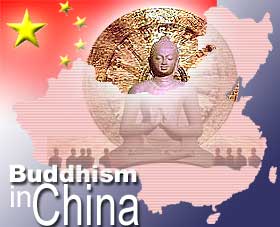 Today,
the 27-year-old lives as a Buddhist nun at the tiny Changxing Temple in
a village near Beijing. She eschews cellphones, T.V. and the Internet,
preferring to spend her time in quiet meditation. “Now Chinese people
are richer,” Yan says, “but they urgently need more spiritual life.”
Today,
the 27-year-old lives as a Buddhist nun at the tiny Changxing Temple in
a village near Beijing. She eschews cellphones, T.V. and the Internet,
preferring to spend her time in quiet meditation. “Now Chinese people
are richer,” Yan says, “but they urgently need more spiritual life.” About
two kilometres away from Dantan in West Midnapur as bronze artefacts
dating back to fifth and sixth centuries started tumbling out of the
ground, one after the other. The state archaeology department has
re-started the excavations at the site after a gap of two years.
About
two kilometres away from Dantan in West Midnapur as bronze artefacts
dating back to fifth and sixth centuries started tumbling out of the
ground, one after the other. The state archaeology department has
re-started the excavations at the site after a gap of two years. Buddhism
gained a large following in Central Asia between the second century
B.C. up to the coming of Islam to the region around the eighth century,
and many of the Turkic peoples living in Kazakhstan adopted it. Though
now the Buddhist population of Kazakhstan is small – only about 0.5
percent of the population as of 2007 – the country has the largest
number of Buddhists in Central Asia. It is also dotted with remnants of
its Buddhist past, particularly in the Zhetysu (“seven rivers”) area of
modern-day southeastern Kazakhstan, which includes today’s Almaty oblast
and historically extended into Kyrgyzstan.
Buddhism
gained a large following in Central Asia between the second century
B.C. up to the coming of Islam to the region around the eighth century,
and many of the Turkic peoples living in Kazakhstan adopted it. Though
now the Buddhist population of Kazakhstan is small – only about 0.5
percent of the population as of 2007 – the country has the largest
number of Buddhists in Central Asia. It is also dotted with remnants of
its Buddhist past, particularly in the Zhetysu (“seven rivers”) area of
modern-day southeastern Kazakhstan, which includes today’s Almaty oblast
and historically extended into Kyrgyzstan.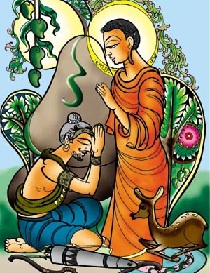 The
spread of Buddhism far and wide also made its traditional teachings and
philosophy subject to an assimilative process that made it indigenous
to the host society and culture. The spread of Buddhism was always
through missionaries and pilgrims who followed established trade routes.
While it had to compete with established religions it was always
amenable to the osmotic absorption of local beliefs and traditions. This
paper examines how Buddhism is localized in Sri Lanka, Japan and India.
The
spread of Buddhism far and wide also made its traditional teachings and
philosophy subject to an assimilative process that made it indigenous
to the host society and culture. The spread of Buddhism was always
through missionaries and pilgrims who followed established trade routes.
While it had to compete with established religions it was always
amenable to the osmotic absorption of local beliefs and traditions. This
paper examines how Buddhism is localized in Sri Lanka, Japan and India. It
is an incontrovertible fact that Buddhism, more than other ideology or
religion, has played a singular role in creating an unique civilization
and shaping the destinies of this country. Sri Lanka is the oldest
Buddhist nation in the world. If not for the continuance of the Dhamma,
through the study and practice of it in this country, it is unlikely
that there would even be a semblance of pure Sasana in Thailand,
Myanmar, Laos, or Cambodia.
It
is an incontrovertible fact that Buddhism, more than other ideology or
religion, has played a singular role in creating an unique civilization
and shaping the destinies of this country. Sri Lanka is the oldest
Buddhist nation in the world. If not for the continuance of the Dhamma,
through the study and practice of it in this country, it is unlikely
that there would even be a semblance of pure Sasana in Thailand,
Myanmar, Laos, or Cambodia.


 This
technique, that's intended to create feelings of kindness can also
reduce prejudice.The study found that just seven minutes of
Loving-kindness meditation (LKM), a Buddhist practise that promotes
unconditional kindness towards oneself and others, is effective at
reducing racial bias.
This
technique, that's intended to create feelings of kindness can also
reduce prejudice.The study found that just seven minutes of
Loving-kindness meditation (LKM), a Buddhist practise that promotes
unconditional kindness towards oneself and others, is effective at
reducing racial bias.  << The projected image of a Buddha statue in Bamiyan that had been destroyed by the Taliban in 2001. (AFP Photo)